





Foot massagers are a pleasant way for many people to relax tired feet. After a long day on your feet, many find a foot massage soothing. However, it is not always advisable to use such a device. There are certain situations and medical conditions in which you should not use a foot massager, or only after speaking to a doctor. But when exactly are foot massagers not recommended? This article answers the question in detail and helps you make informed decisions about your health and wellbeing.
Show table of contents
- Next article: Best foot massager for neuropathy: what to look for
- Next article: How long and how often should you use a foot massager?
- Next article: Foot massager benefits: do they work and who are they for?
- Next article: When should you not use a foot massager?
- Next article: Are foot massagers healthy?
- Next article: Is a foot massager good for blood circulation?
Summary/TLDR
Many people find foot massagers soothing and relaxing, but they are not suitable for everyone. With a pacemaker or another implant, the manufacturer’s instructions apply, and you should speak to your doctor before use. With circulatory disorders, thrombosis, open wounds, fresh injuries and acute inflammation, it is better not to use one until a doctor has cleared it. During pregnancy, with diabetes and with chronic conditions, only use the device after speaking to your doctor. The article explains the reasons. If you experience numbness or tingling, the guide on foot massagers for nerve damage in the feet will help.
When are foot massagers not permitted?
Health conditions that restrict use
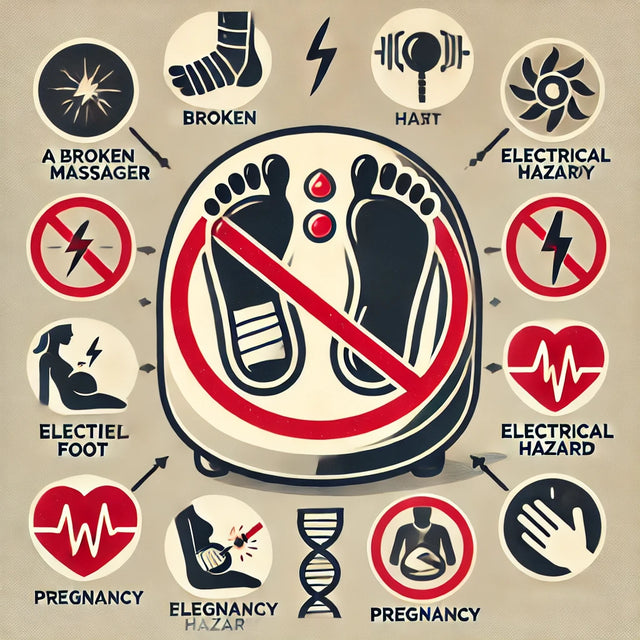
There are several medical conditions where using a foot massager can be not only uncomfortable but also dangerous. Here are some of the most common cases:
Pacemakers and implants
If you have a pacemaker, a defibrillator or another implanted medical device, check with your doctor before use and follow the instruction manual; many manufacturers rule out use. EMS devices, which work with electrical impulses, are not an option.
Circulatory disorders
People with circulatory disorders, such as those associated with peripheral arterial disease (PAD), should not use a foot massager until a doctor has cleared it. Pressure and heat can put additional strain on tissue that is already damaged. With thrombosis or suspected thrombosis, the manufacturer expressly calls for medical advice before use, and the same applies to vein conditions such as varicose veins or phlebitis.
Injuries and wounds
If you have a fresh injury or open wounds on your feet, it is wiser to leave the foot massager in the cupboard. Pressure and friction can irritate the wound and disturb healing, and the risk of infection also increases. This applies as long as the wound has not closed. With open areas on the feet, the manufacturer recommends checking with a doctor before use.
Inflammatory conditions
Foot massagers should also be used with caution with inflammatory conditions such as arthritis or gout. During acute phases of these conditions, the massage can make the inflammation worse and cause additional pain. So check with your doctor before use.
Pregnancy
During pregnancy the feet are often swollen, and many people would then like a foot massage. According to traditional teaching, some acupressure points on the foot and ankle are best avoided during pregnancy. There is no evidence that they trigger labour. For NAIPO devices, the manufacturer’s guidance applies: during pregnancy, only use a foot massager after speaking to your doctor. More on this in the guide Foot massagers in pregnancy.
General safety concerns
In addition to specific health problems, there are also general safety concerns to bear in mind before using a foot massager.
Electrical risks
Foot massagers are electrical appliances, and as with any electrical appliance, there is a risk of a short circuit or electric shock. So do not use a device without a water function near water, and check the cables regularly for damage.
Overusing your feet
It may be tempting to use a foot massager for hours, especially when it feels pleasant. But here too, less is sometimes more. As a guideline, 15 to 20 minutes per session; the instruction manual and automatic shut-off of your device take priority. Sessions that are too long can irritate the skin and feet. More on this in the guide How long can you use a foot massager?.
Alternatives to a foot massager
If you are in a situation where using a foot massager is not advisable, there are still alternatives to give your feet some relief.
Manual foot massage
A manual massage, whether by a partner or a professional massage therapist, can be a good alternative. It allows you to focus on sensitive areas and control the intensity of the massage better. With the conditions mentioned above, speak to your doctor here as well.
Warm foot baths
Many people also find a warm foot bath with essential oils or bath salts relaxing. With circulatory disorders, diabetes or reduced sensation in the feet, however, caution is needed here too, because water that is too hot is not always noticed in time.
Using NAIPO products
Another alternative is products from the NAIPO brand. NAIPO offers a range of massagers designed for different needs. Before use, however, make sure the device you choose is suitable for your state of health.
If you want to use a device despite an existing condition, look for different criteria than a healthy user would, above all a really gentle lowest setting and heat that can be switched off. Which ones these are is explained in Foot massagers for polyneuropathy: what to look for. A very similar list applies to massage chairs: Massage chairs: health risks and when to avoid them.



Conclusion
For many people, foot massagers are a pleasant way to relax after a long day. However, there are situations in which they should not be used, or only after a doctor has cleared it. With a pacemaker, the manufacturer’s instructions and medical advice apply, and EMS devices are not an option. With circulatory disorders, injuries, inflammation or during pregnancy, ask your doctor first. If you still do not want to do without a foot massage, there are alternatives such as manual massage, warm foot baths or suitable products from the NAIPO brand.
Frequently Asked Questions (FAQs)
1. Can I use a foot massager if I have diabetes?
People with diabetes should take particular care. As diabetes is often associated with circulatory problems and nerve damage, it is advisable to consult a doctor before using a foot massager. The manufacturer also recommends medical advice with diabetes. Keep the heat function switched off, because reduced sensation in the feet means too much heat often goes unnoticed.
2. Is it safe to use a foot massager every day?
For most people, a short daily session is fine, provided there are no health concerns. Do not overdo it, stick to the guideline of 15 to 20 minutes and take breaks.
3. Can a foot massager make varicose veins worse?
That is possible. With vein conditions such as varicose veins, the manufacturer recommends checking with a doctor before use. So speak to a doctor before using a foot massager.
4. How long should a session with a foot massager last?
As a guideline, 15 to 20 minutes to avoid overuse. The instruction manual and automatic shut-off of your device take priority: if the manual says less or the device switches off sooner, that applies.
5. Are there special foot massagers for older people?
Devices built specifically for older people are rare. More important are a gentle lowest setting, heat that can be switched off and simple controls. With existing conditions, the same applies in later life: check with a doctor before use.
With this information, you can make a responsible decision about when and how to use a foot massager. If in doubt, ask your doctor first.

Written by NAIPO Editorial Team · Massage & Product Experts from Hamburg
Product experts, service technicians, and massage enthusiasts at Alsterwell GmbH — specializing in massage technology for over a decade, with our own workshop and showrooms for test sitting.
NAIPO Editorial Team · Sources verified


Leave a comment
This site is protected by hCaptcha and the hCaptcha Privacy Policy and Terms of Service apply.